Request A Quote

100+ Years of Combined Experience in the Tree Service Industry
Specialty Painting
(Interior & Exterior)
Specialty painting covers custom finishes and protective coatings that go beyond standard paint applications.
Specialty Painting for Interior and Exterior Surfaces That Deserve More Than a Standard Coat of Paint
Some homes call for a finish with more depth, texture, and character than flat color can provide. Specialty painting uses traditional and decorative techniques to give walls, brick, masonry, and feature areas a softer, richer, more individual look. Alongside our professional painting services , we offer Specialty Painting for both interior and exterior surfaces, including limewash, whitewash, velatura mineral wash, Venetian glaze, and ombre finishes.
These finishes depend heavily on surface condition, application method, and the way each layer is blended. They are also very different from each other, so choosing the right one starts with understanding the surface and the look you want. If you are also updating living spaces, our interior painting team can coordinate the work, and you can contact our painting team to talk through your project.
Specialty Painting Finishes We Offer for Interior and Exterior Projects
Specialty Painting is a good fit when you want a finish with visible depth, a softened appearance, or a custom look that standard paint does not provide. Our specialty finishes include:
- Limewash for a soft, matte, mineral look on brick, stucco, masonry, and suitable interior surfaces
- Whitewash for a lighter, semi-translucent finish that lets brick, wood, and texture show through
- Velatura mineral wash for layered, translucent color with a subtle, luminous depth
- Venetian glaze for a refined, layered finish with dimension and a gentle sheen
- Ombre finish for a gradual, blended transition from one color tone to another
Each of these finishes can transform how a space or home exterior looks and feels. The right choice depends on the surface, the setting, and the effect you want to create.
Limewash Painting for a Soft, Natural, and Timeless Look
Limewash is a mineral-based finish traditionally made from slaked lime. It creates a soft, matte, slightly chalky appearance with natural variation that standard paint cannot easily imitate. Because it absorbs into porous surfaces instead of sitting on top like a film, limewash is often used on brick, stucco, plaster, and other masonry where a more natural, aged character is desired.
The photos below show a brick home before and after a limewash finish. The dark red brick was transformed into a lighter, softer, more refined exterior while keeping the texture and character of the brick visible.
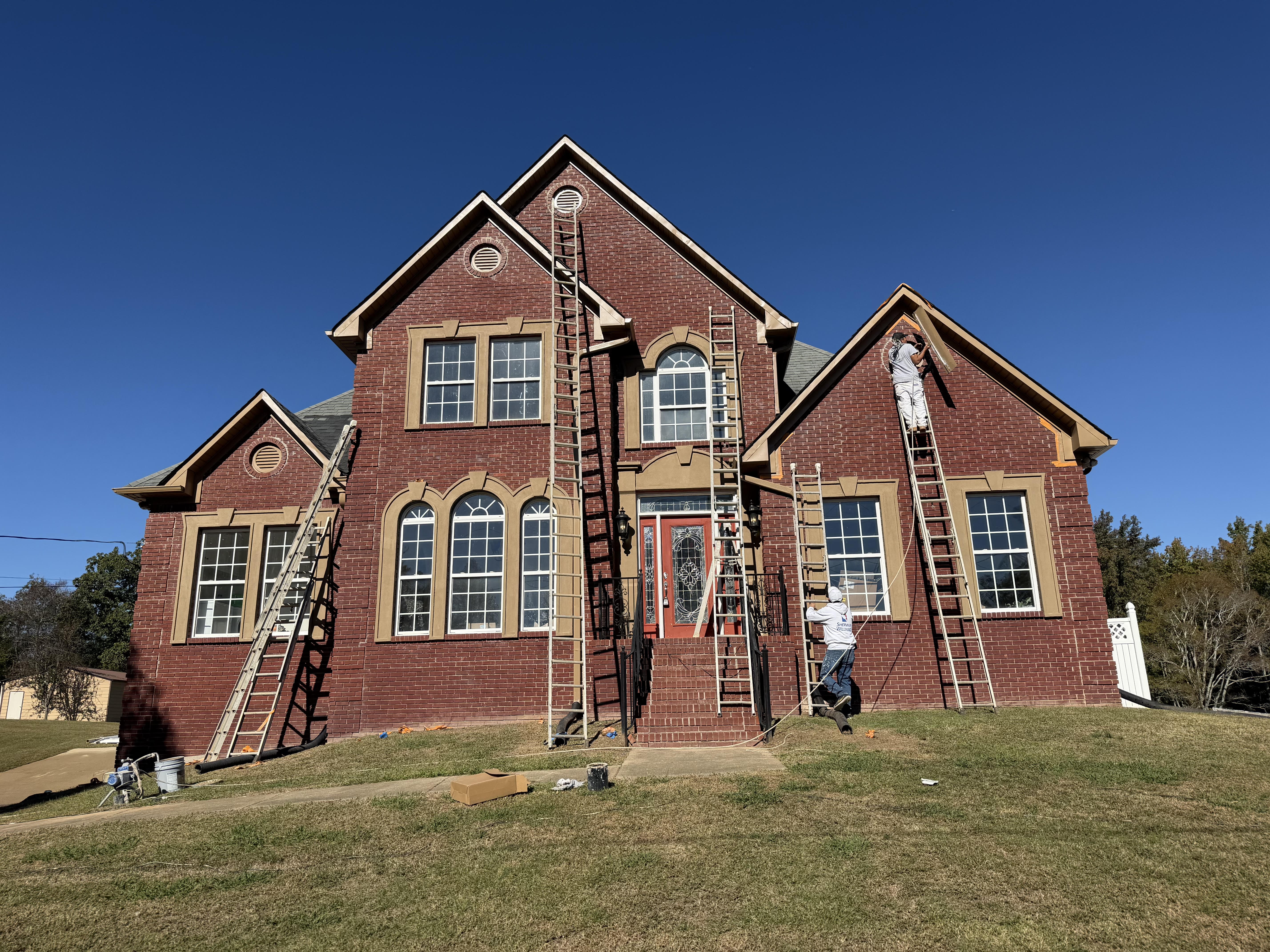 Before
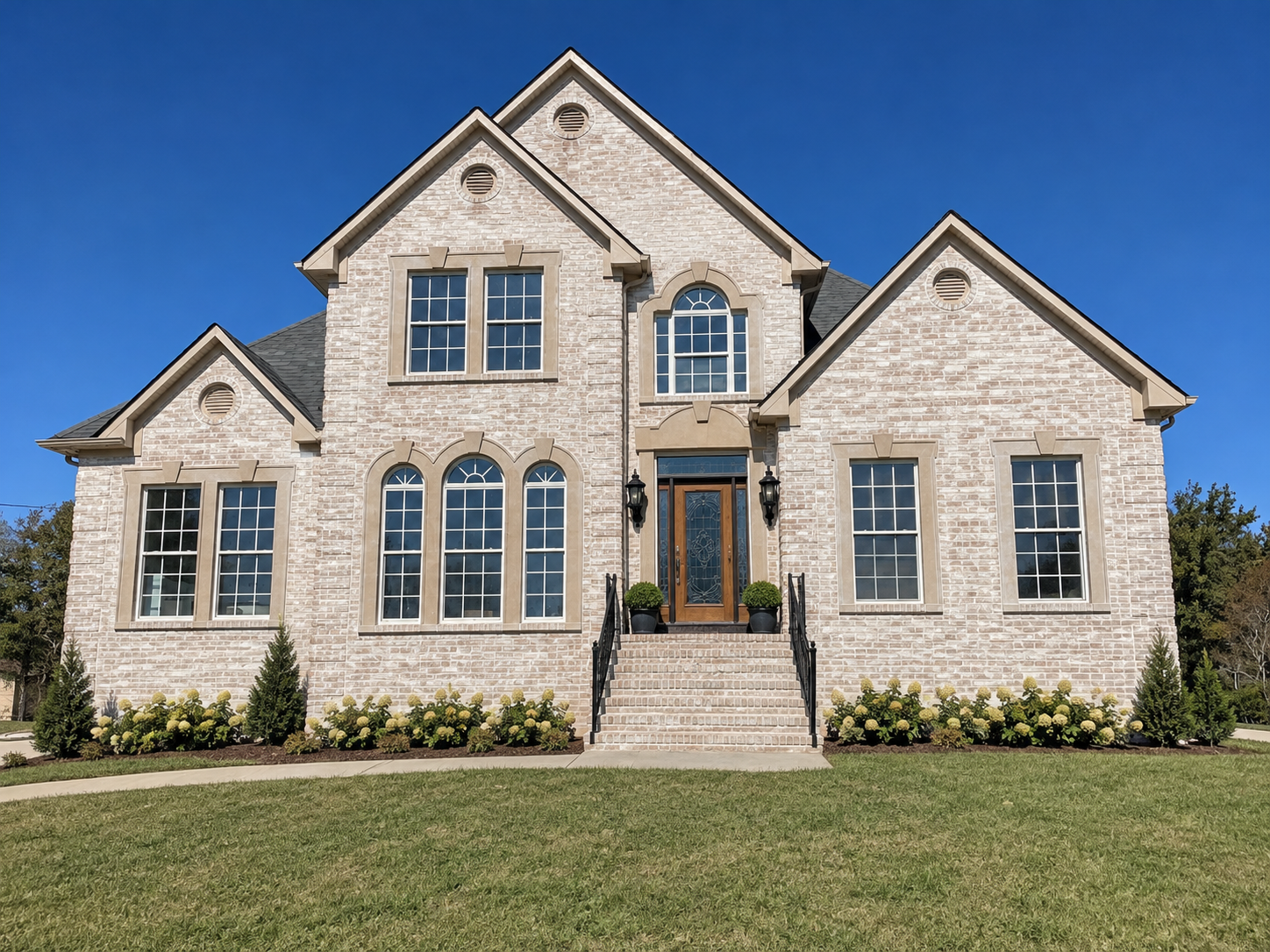 After
Limewash project: before and after.
Limewash works for exterior brick and masonry as well as interior features such as fireplaces, accent walls, and plaster surfaces. Final results depend on the surface, its porosity, and any previous coatings, which is why we evaluate each surface before recommending an approach.
Whitewash Finishes That Lighten Surfaces While Keeping Their Character
Whitewash is a lighter, semi-translucent finish that softens the color of a surface without completely covering it. Instead of a solid coat, the wash allows the texture, grain, mortar lines, and natural variation of the surface to remain visible. The result is an airy, casual, lived-in appearance.
This finish is popular on brick, wood, paneling, and fireplace surrounds where homeowners want a brighter feel without a heavy painted look. The level of coverage can be adjusted, from a sheer wash that barely lightens the surface to a more opaque result, depending on the appearance you prefer.
Velatura Mineral Wash for Layered Depth and Subtle Luminosity
Velatura comes from the Italian word for "veil," and the technique uses thin, translucent layers of color to build depth. A velatura mineral wash creates a soft, shifting effect in which the color seems to move slightly with the light, giving walls a richer and more sophisticated look than a flat coat.
Because the finish is built in layers, it takes careful preparation, even application, and controlled blending. It is often chosen for living rooms, dining rooms, entryways, and other feature spaces where a refined, elevated appearance is the goal.
Venetian Glaze Finishes for Dimension, Movement, and a Refined Sheen
A Venetian glaze finish uses layered glaze over a prepared base coat to create a polished, dimensional look inspired by traditional Venetian plaster. The finish can range from a subtle, muted effect to a more pronounced one with visible movement and a soft sheen, depending on the colors and technique used.
This finish is most commonly used on interior walls, accent walls, entryways, and statement areas. Surface smoothness matters a great deal, so preparation is a major part of the process. Suitability for a particular space depends on the surface, the product used, and the look you want to achieve.
Ombre Finishes That Blend Color Into a Smooth Gradient
An ombre finish blends one color gradually into another, creating a smooth gradient across a wall or surface. Done well, the transition looks seamless and adds movement and visual interest without the busyness of a pattern.
Ombre walls are often used as feature walls, in bedrooms, nurseries, entryways, and creative spaces. Success depends on careful color selection, controlled blending while the paint is workable, and an even hand across the full surface, so we plan the color transition before we begin.
Where Specialty Painting Works Best on Interior and Exterior Surfaces
Different finishes suit different surfaces and settings. As a general guide, here is where each finish is commonly used:
- Exterior brick and masonry — limewash and whitewash are common choices, depending on the condition and porosity of the surface
- Stucco and plaster — limewash and mineral washes can create a soft, natural character
- Fireplaces and accent features — limewash, whitewash, and glaze finishes can add focus and depth
- Living areas, dining rooms, and entryways — velatura and Venetian glaze can create a refined, layered look
- Bedrooms, nurseries, and feature walls — ombre finishes can add soft color movement
Not every finish suits every surface, so we recommend options based on the actual material, its condition, and where it is located. For exterior projects, our exterior painting services can complement specialty finishes as part of a larger update.
Proper Surface Preparation Is Essential for Specialty Finishes
Specialty finishes are less forgiving than standard paint because their character comes from the surface itself and from how each layer is applied. Dirt, previous coatings, uneven patching, moisture, and surface texture can all affect how the finish looks and performs.
Depending on the project, preparation may include cleaning, repairing damaged areas, assessing existing paint, testing for adhesion, and protecting surrounding surfaces. Sample areas can also help confirm color and effect before the full project begins.
Specialty Painting Service Across the Communities We Serve
Homes throughout the region vary in age, architecture, and materials, and each one responds differently to specialty finishes. We tailor Specialty Painting to the property and the look the homeowner wants instead of applying a standard approach to every house.
- Birmingham : Birmingham includes a wide range of older brick homes, newer builds, and renovated properties that can benefit from limewash, whitewash, and decorative interior finishes.
- Tuscaloosa : Tuscaloosa homeowners updating brick exteriors or refreshing interior feature areas can use specialty finishes to create a more distinctive look.
- Hoover : Hoover homes with brick exteriors, fireplaces, and formal interior spaces can work well with limewash, velatura, and Venetian glaze finishes.
- Vestavia Hills : Vestavia Hills properties often feature architectural detail that pairs well with refined specialty finishes on both exterior masonry and interior walls.
- Alabaster : Alabaster homeowners can use whitewash and limewash to soften brick and brighten spaces while preserving surface texture.
- Northport : Northport homes with brick, stucco, or accent features may benefit from mineral-based finishes that add natural character.
- Homewood : Homewood's established homes can be refreshed with whitewash, limewash, or layered interior finishes that respect existing architectural character.
- Trussville : Trussville homeowners can use specialty finishes to update brick exteriors and add depth to entryways, living areas, and feature walls.
- Pelham : Pelham homes may benefit from a soft limewash on brick or a custom interior finish that gives a room more personality.
- Bessemer : Bessemer properties of varying ages and materials can be assessed for the specialty finish that best fits their surfaces.
- Helena : Helena homeowners can use ombre, velatura, and glaze finishes to add warmth and visual interest to interior spaces.
- Mountain Brook : Mountain Brook homes with detailed architecture can pair well with refined finishes such as Venetian glaze, velatura, and limewash.
- Calera : Calera homeowners updating a brick exterior or a main living space can use specialty finishes to create a more custom appearance.
- Chelsea : Chelsea's newer and established homes can use specialty painting to add texture, depth, or a softer exterior look.
- Gardendale : Gardendale homes with older brick or dated finishes may benefit from whitewash or limewash to refresh their appearance.
- Hueytown : Hueytown properties with older surfaces are evaluated closely so the chosen finish suits the condition of the masonry or walls.
- Center Point : Center Point homeowners can use specialty finishes to give fireplaces, feature walls, and exteriors a distinctive new look.
- Irondale : Irondale homes can be matched with finishes suited to their specific materials, whether brick, stucco, plaster, or painted drywall.
- Leeds : Leeds homeowners can use layered or blended finishes to create a more personalized look in key living spaces.
- Montevallo : Montevallo's mix of older and newer homes makes surface assessment especially important when choosing a specialty finish.
- McCalla : McCalla homeowners can choose from limewash, whitewash, velatura, Venetian glaze, and ombre finishes for interior and exterior projects, with preparation planned around each surface.
Specialty Painting Built Around Craftsmanship and Attention to Detail
Homeowners looking for dependable painting services can also explore a focused residential painting solution when the rest of the home needs a fresh look to complement a specialty finish. When you are ready to discuss surfaces, finish options, and the right approach for your property, contact our painting team for a Specialty Painting consultation.
Specialty finishes reward patience and skill. Our approach focuses on careful preparation, consistent technique, clear communication, and a finished result that suits the home and the look you had in mind.
When a Specialty Finish May Be the Right Choice for Your Home
Specialty Painting is not necessary for every project, but it can be an excellent option in situations like these:
- Brick that looks dated, too dark, or no longer matches the style of the home
- A fireplace, entryway, or feature wall that needs more depth and character
- A desire for a softer, more natural look than flat paint provides
- Walls that feel plain and could benefit from layered color or subtle sheen
- A renovation, remodel, or home update where decorative finishes are part of the design plan
- A preference for a custom, one-of-a-kind look instead of a standard painted surface
Why Homeowners Choose Us for Specialty Painting
- Experience with traditional and decorative finishes on interior and exterior surfaces
- Careful surface evaluation before any finish is recommended
- Attention to blending, consistency, and finishing detail
- Finish recommendations based on the actual surface, setting, and desired look
- Sample areas available to help confirm color and effect
- Clear communication from consultation through completion
What Can Affect the Cost of Specialty Painting?
Specialty finishes are more involved than standard painting, and costs vary with the type of finish and the property. Common factors include:
- Type of finish — layered techniques such as velatura and Venetian glaze generally involve more labor than a single wash
- Size of the area — a full home exterior is a larger project than a single feature wall or fireplace
- Surface condition — previous coatings, repairs, and cleaning needs can add preparation
- Surface material — brick, stucco, plaster, and drywall each behave differently and may need different products
- Access and height — multi-story exteriors and hard-to-reach areas can add complexity
- Color and effect selection — custom color blending and multi-step techniques can affect materials and time
We believe homeowners should understand what shapes the scope of a specialty painting project before work begins, so the recommendation always reflects the actual surface and the desired result.
Frequently Asked Questions About Specialty Painting
Limewash is a mineral-based finish that absorbs into porous surfaces and creates a soft, matte, naturally varied look. Whitewash is a lighter, semi-translucent wash, often made by thinning paint or lime, that lightens a surface while letting its texture and character show through. Both can be used on brick and similar surfaces, but the look and behavior differ.
Yes, limewash is commonly used on exterior brick and masonry. The results depend on the brick's porosity, condition, and whether it has been painted or sealed before, so we evaluate the surface first.
It depends on the existing coating. Limewash works best on porous, unpainted masonry, and previously painted or sealed brick may need a different product or additional preparation. A professional assessment can help determine the best option.
Both. Limewash and whitewash are used on interior and exterior surfaces, while velatura, Venetian glaze, and ombre finishes are most often used on interior walls. Suitability depends on the product, the surface, and the setting.
Velatura uses thin, translucent layers to create soft depth and subtle variation in color. Walls tend to look richer and slightly luminous, with a gentle shift in tone as the light changes.
Sample areas can help confirm color and effect before the full application, particularly for layered or blended finishes. This is a good way to make sure the result matches your expectations.
The timeline depends on the finish, the size of the area, surface preparation, and drying time between steps. Layered techniques usually take longer than a single-coat wash.
Other Painting Services Available Besides Specialty Painting
DISCOVER WHAT OUR CUSTOMERS HAVE TO SAY ABOUT US
REVIEWS
REVIEW US ON GOOGLE
our process
Our process is simple and only contains a few steps
proudly serving these areas
Birmingham
Hoover
Vestavia Hills
Homewood
Alabaster
Helena
Pelham
Northport
Bessemer
Trussville
Mountain Brook
Calera
Chelsea
Tuscaloosa
Gardendale
Hueytown
Center Point
Irondale
Leeds
Montevallo
McCalla
READY TO take the next step?
get a free quote TODAY!

business
our services
service areas
operating HOURS
Monday: 7:00 AM - 8:00 PM
Tuesday: 7:00 AM - 8:00 PM
Wednesday: 7:00 AM - 8:00 PM
Thursday: 7:00 AM - 8:00 PM
Friday: 7:00 AM - 8:00 PM
Saturday: 7:00 AM - 8:00 PM
Sunday: Closed


© 2026 Stoney Oak Painting